


Views: 0 Author: Site Editor Publish Time: 2026-10-01 Origin: Site


Equipment failure rarely announces itself. It usually starts invisibly deep within industrial pipelines, triggered by poor particulate management. As a fluid systems engineer, you know the drill. Selecting the precise metallic materials tailored for unique flow rates, aggressive temperatures, and stringent micron requirements is a constant battle.
With a myriad of industrial separation options on the market, making an uninformed choice leads straight to catastrophic mechanical downtime. In this comprehensive breakdown, we will evaluate the three heavyweights of industrial fluid and gas purification. By understanding their distinct performance metrics and ideal operational environments, you will be equipped to choose the optimal filter media for your specific processing system.
Key Takeaways
Sintered Metal Powder: Best for high-pressure applications requiring rigid structural integrity and precise gas or liquid diffusion.
Sintered Metal Fiber Felt: Unbeatable for high dirt-holding capacity, low pressure drop, and handling highly viscous fluids like molten polymers.
Sintered Wire Mesh: The go-to choice for surface filtration, offering excellent in-line backwashing capabilities and absolute pore sizes for water and hydraulic oil treatment.
Selection Rule of Thumb: Your final component choice ultimately depends on a careful engineering balance of operating temperature, fluid viscosity, required micron rating, and your facility maintenance methodology.
Recent market analyses reveal a definitive structural shift in the industrial filtration sector. We are seeing a massive global transition away from disposable polymeric elements. This shift is largely driven by stringent environmental regulations and the rapid expansion of next-generation energy sectors. For instance, green hydrogen electrolyzers demand highly specialized titanium porous transport layers. Similarly, modern chemical plants are pushing operating temperatures higher to maximize yield, rendering traditional synthetic filters useless. There is a surging demand for robust, reusable metallic alternatives capable of enduring extreme processing parameters while aligning with corporate sustainability goals. Selecting the proper components for these modern environments requires a fundamental grasp of materials science.
Sintering is a highly controlled powder metallurgy process. It utilizes precise heat and atmospheric pressure to fuse metal particles together without melting them to the point of liquefaction. This sophisticated thermal treatment creates a robust, porous structure where metal atoms diffuse across particle boundaries. Consequently, it forms a unified matrix that retains its engineered porosity while gaining immense mechanical strength.
When evaluating purification options, engineering teams often compare metallic matrices against natural fibers, synthetic polymers, or paper-based equivalents. While non-metallic options are perfectly suitable for standard, low-stress environments, they frequently degrade or rupture under extreme industrial conditions. Sintered metal provides distinct operational advantages. It offers exceptional thermal resistance, routinely maintaining structural integrity at continuous temperatures exceeding 400°C, scaling up to 600°C with specific superalloys. Furthermore, metallic elements demonstrate superior chemical compatibility against aggressive solvents and corrosive acids. Most importantly, their inherent mechanical strength allows for repeated cleaning and reuse, drastically reducing long-term consumable costs.
The manufacturing process strictly dictates the final performance of the element. Initially, raw metallic materials, whether in the form of atomized powder, microscopic fibers, or woven mesh, are carefully selected based on alloy type. Common choices include 316L stainless steel, titanium, or specialized high-nickel alloys. These raw materials are then compacted, layered, or calendered into specific geometric shapes. Finally, they enter a high-temperature vacuum or inert gas furnace. During this critical phase, the metallic elements bond at a molecular level. This precise methodology ensures the resulting component possesses exact micron ratings and stable pore geometries that refuse to shift or tear, even when subjected to intense flow surges.
For applications demanding uncompromising structural rigidity and precise filtration gradients, powder-based media remains a primary engineering consideration.
These robust elements are constructed from spherical or irregular metal powders. Through isostatic pressing or custom molding, these fine powders are shaped into tubes, flat discs, or complex custom geometries before entering the furnace. The resulting internal structure features a labyrinth-like depth filtration matrix. Fluid or gas is forced to navigate a highly tortuous path through the fused powder. As a result, contaminants are trapped deep within the dense walls of the media rather than merely accumulating on the exterior surface.
The defining advantage of sintered metal powder filters is their extreme mechanical resilience. They form a self-supporting architecture that completely eliminates the need for internal hardware cores or external support meshes. This makes them highly resilient against severe differential pressures and sudden mechanical shocks. Looking at standard industry specifications, the powder metallurgy process allows for highly accurate and consistent micron ratings. These typically range from ultra-fine 0.1 microns up to 100 microns.
However, there is an inherent physical trade-off. Powder matrices generally exhibit a lower porosity compared to felt or mesh, typically hovering between 30% and 50%. This restricted void volume translates to a higher initial pressure drop across the element. You must meticulously account for this factor during system pump sizing to avoid energy inefficiencies.
Due to their rigid, unyielding structure and incredibly fine pore distribution, powder elements are heavily utilized in demanding industrial sectors. Imagine a high-pressure chemical reactor requiring precise gas injection. Here, powder filters are the standard choice for sparging, which is the uniform diffusion of gases into liquids. They are also widely specified for specialized gas purification, flame arrestors in hazardous environments, and valuable catalyst recovery in petrochemical processing plants.
When the operational priority shifts toward maximizing volumetric flow rates and handling heavy, sticky contaminant loads, fiber-based media becomes the optimal engineering choice.
This highly permeable media is fabricated from extremely fine, non-woven metal fibers. These microscopic threads are laid down in a randomized web structure, compressed, and subsequently sintered together at high temperatures. Unlike tightly woven materials, this randomized construction creates a true three-dimensional depth filtration matrix characterized by highly interconnected, open pores.
The standout feature of sintered metal fiber felt filters is their exceptionally high porosity. This void volume can astonishingly reach up to 80% to 90%. Such a massive open area provides an unparalleled dirt-holding capacity. It ensures a remarkably low initial pressure drop, even when processing fluids at high velocities. Consequently, systems utilizing fiber felt benefit from significantly longer on-stream lifespans before maintenance interventions are required.
The primary limitation lies in its structural flexibility. Because it is so highly porous, the felt lacks the standalone rigidity of solid powder elements. To successfully withstand high operating pressures or severe flow surges, fiber felt almost always requires lamination with a rigid support layer. Engineers typically pair it with a coarse woven wire mesh to prevent the media from collapsing or migrating downstream.
The unique fluid dynamic properties of fiber felt make it indispensable for processing highly viscous substances. It serves as the undisputed industry standard for polymer melt filtration in the plastics and synthetic fiber industries, where minimizing pressure buildup is critical. Additionally, it is widely specified for heavy chemical processing, high-temperature exhaust gas filtration, and any application where maximizing the operational cycle between cleaning intervals directly impacts profitability.
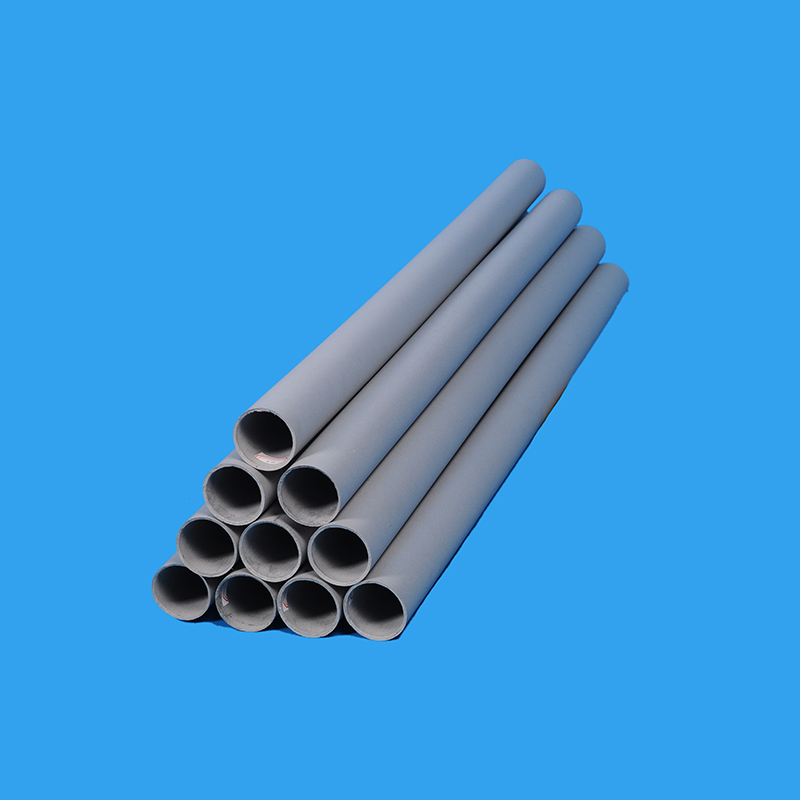
For systems that require absolute separation precision alongside frequent, rapid cleaning cycles, woven and sintered mesh configurations provide a highly effective, low-maintenance solution.
Unlike the randomized depth structure of felt or powder, these filters are engineered by layering multiple sheets of meticulously woven wire mesh. A standard configuration typically involves five distinct layers. This includes a robust protective outer layer, a fine precision control layer, a dispersion layer to distribute flow, and inner support layers. These distinct sheets are calendered together and sintered to create a unified, rigid panel or cylinder where every single wire intersection is permanently metallurgically fused.
The defining advantage of sintered wire mesh filters is their surface filtration mechanism. Contaminants are captured primarily on the exterior surface of the control layer rather than getting lodged deep within a matrix. This makes these elements incredibly easy to clean. They offer excellent backwashing capabilities, allowing automated systems to regenerate the filter in place without halting production lines. Furthermore, the precise woven nature of the mesh provides absolute pore sizes, structurally guaranteeing that no particle larger than the specified rating will ever pass through.
In contrast, the primary limitation of wire mesh is its lower dirt-holding capacity compared to fiber felt. Particulates accumulate strictly on a two-dimensional surface rather than within a three-dimensional depth structure. Therefore, the filter can blind off, or clog, much more quickly if subjected to unexpectedly heavy contaminant loads.
Sintered mesh is highly valued in industries that prioritize strict hygiene, precise separation, and continuous operation through automated backwashing. Common applications include food and beverage processing, municipal and industrial water treatment, hydraulic oil purification, and stringent pharmaceutical manufacturing where absolute micron cut-offs are non-negotiable.
To facilitate accurate procurement and engineering decisions, it is crucial to evaluate these three materials across standardized technical dimensions. The following comparison highlights how each matrix performs under specific operational parameters.
Technical Parameter | Sintered Metal Powder | Sintered Fiber Felt | Sintered Wire Mesh |
|---|---|---|---|
Filtration Mechanism | Depth | 3D Depth | Surface |
Porosity Level | Low, 30% to 50% | Very High, 80% to 90% | Medium, depends on layers |
Initial Pressure Drop | High | Very Low | Moderate |
Dirt-Holding Capacity | Moderate | Extremely High | Low |
Mechanical Rigidity | Excellent, self-supporting | Low, requires mesh support | High |
Cleanability | Moderate, ultrasonic or chemical | Moderate, ultrasonic or chemical | Excellent, backwashable |
Filtration accuracy capabilities vary significantly across media types. Powder elements excel in the ultra-fine range, reliably capturing particles down to 0.1 microns, making them ideal for delicate gas purification. Wire mesh provides absolute precision. Because the pore sizes are rigidly fixed by the weaving loom, they deliver exact cut-off points, typically ranging from 1 to 300 microns. Fiber felt offers varied depth filtration, capturing a broad spectrum of particle sizes simultaneously, usually rated between 1 and 80 microns.
There is a strict inverse relationship between pressure drop and porosity in fluid dynamics. Fiber felt emerges as the definitive winner for applications requiring massive flow rates with minimal energy loss, thanks to its 90% void volume. Conversely, the dense, restrictive structure of powder media limits flow, resulting in a naturally higher pressure drop that necessitates more robust pumping infrastructure.
All three formats offer excellent baseline temperature resistance due to their metallic nature. However, when subjected to extreme mechanical stress or aggressive differential pressures, powder and sintered mesh take the definitive lead. The permanently fused intersections of the mesh and the solid walls of the powder matrix actively prevent deformation. An unsupported felt, on the other hand, could compress under high pressure, inadvertently altering its micron rating.
Maintenance protocols ultimately dictate the long-term viability and operational cost of a filtration system. Wire mesh is by far the easiest to regenerate. A simple reverse flow, known as backwashing, dislodges surface filter cakes highly efficiently. Powder and felt media trap particles deep within their intricate structures. They typically require taking the system entirely offline for more intensive cleaning methods, such as ultrasonic baths, chemical solvents, or high-temperature pyrolysis ovens.
Selecting the appropriate industrial filter is rarely a simple guessing game. It requires a systematic evaluation of fluid dynamics, operating environments, and facility maintenance capabilities. Follow this rigorous framework to ensure optimal performance and prevent premature equipment failure.
The first critical decision is determining exactly how you need to capture particulate matter. Surface filtration acts like a highly precise sieve, blocking contaminants on the exterior to form a filter cake. This is ideal for uniform, non-deformable solids that need to be removed easily via backwashing, making wire mesh the top choice. Depth filtration forces fluid through a labyrinth, capturing particles throughout the entire thickness of the material. This mechanism is mandatory when dealing with a high concentration of deformable particles, gels, or when exceptionally high dirt-holding capacity is required, pointing you toward powder or felt.
Fluid viscosity drastically impacts the initial pressure drop across any matrix. Pushing a highly viscous liquid, such as a polymer melt or heavy hydraulic oil, through a dense media requires immense energy. Thick fluids demand media with high porosity to prevent excessive pressure buildup. Fiber felt is the superior choice here. If your system processes large volumes of low-viscosity fluids, such as water or light solvents, at high speeds, either fiber felt or multiple-layer mesh can accommodate the flow without restriction.
The physical and chemical environment dictates the base alloy required. Standard 316L stainless steel performs reliably in continuous operating temperatures up to 400°C. However, if your process involves petrochemical refining, highly acidic chlorides, or hot gas filtration exceeding 600°C, the base material matters far more than the structural format. In such extreme scenarios, you must specify advanced superalloys like Inconel, Hastelloy, or Monel to prevent rapid degradation.
Dirt-holding capacity, known as DHC, defines how much particulate mass a component can trap before the pressure drop reaches an unacceptable level, necessitating a system shutdown. If your facility cannot tolerate frequent downtime, DHC becomes a paramount metric. Specify felt media to provide the highest DHC due to its three-dimensional matrix. Balancing your required maintenance intervals with the media capacity is crucial for continuous, profitable operations.
Procurement decisions based solely on the initial purchase price routinely lead to inflated operational costs. The total cost of ownership must include the upfront capital expenditure, the labor and downtime associated with removing and cleaning the filters, the regeneration lifespan of the metal, and energy consumption. A more expensive sintered mesh might actually yield a lower total cost of ownership if its automated backwashing capabilities completely eliminate the need for costly offline ultrasonic cleaning.
Even highly experienced engineering teams can encounter pitfalls when specifying metallic filtration systems. Miscalculations in the procurement phase can lead to compromised product purity, damaged pumps, and hazardous system blowouts. Avoid these frequent industry mistakes to ensure a reliable process.
Every filtration system operates within a maximum allowable differential pressure. As the element captures contaminants, fluid resistance increases, forcing the system pumps to work harder. A frequent oversight is selecting a porosity that is far too tight for the application. This causes a rapid spike in initial pressure drop. If the differential pressure exceeds structural limits, the element can collapse, releasing all trapped contaminants downstream. Always align the clean pressure drop with your specific pump curves.
Understanding micron rating terminology is a common stumbling block. A nominal rating indicates an average pore size. This means a 10-micron nominal filter might capture 85% of particles that size, but oversized particles may still slip through irregular depth structures. An absolute rating represents a hard limit, guaranteeing 99.9% capture of that specific size. When absolute precision is required, such as in fine chemical processing, relying on a nominal depth filter can ruin an entire batch. Always specify absolute-rated mesh when strict cut-offs are mandatory.
Not all manufacturing processes are created equal. Proper metallurgical bonding requires precise control of temperature, time, and atmospheric conditions within a furnace. Choosing a supplier based exclusively on the lowest price often results in acquiring poorly sintered media. Under high pressure or during rigorous cleaning cycles, sub-standard wire mesh layers can delaminate. Loose metal powders can also break away, known as media migration, contaminating the very fluid they were meant to purify. Emphasize the importance of choosing a reputable manufacturer with stringent quality assurance protocols.
Woven wire mesh consists of metallic wires woven together on a loom. While effective for basic straining, the individual wires are not permanently bonded. Under fluctuating pressures or high flow rates, these wires can shift, altering the pore size and allowing larger contaminants to pass. Sintered wire mesh solves this critical flaw. Through a high-temperature thermal process, the intersections of the woven wires are metallurgically fused together. This locks the pore geometry permanently in place, prevents fraying, and adds immense structural strength.
Yes. One of the primary economic advantages of metallic matrices over disposable paper or synthetic alternatives is their reusability. Depending on the format and the nature of the trapped contaminants, these components can be regenerated multiple times. Surface filters are easily cleaned via in-line fluid or gas backwashing. Depth filters trap particles internally and typically require offline cleaning methods, including ultrasonic baths, chemical solvent washes, or high-temperature burn-off ovens to eliminate organic residues.
All three primary formats handle high temperatures exceptionally well. Standard 316L stainless steel versions of powder, felt, and mesh safely operate continuously at temperatures up to 400°C. However, when addressing extreme heat, the metallurgical composition is much more critical than the physical structure. For applications exceeding 600°C, you must upgrade the base material to specialized high-nickel alloys such as Inconel or Hastelloy, regardless of whether you choose a powder, felt, or mesh design.
The decision relies heavily on your contaminant load and cleaning preferences. Use surface filtration if your fluid contains a low concentration of hard, solid contaminants and your facility is designed for automated, in-line backwashing. Conversely, use depth filtration if your fluid contains a high concentration of particles, deformable gels, or if you require long on-stream cycles without maintenance interruptions.
Calculating pressure drop requires understanding the fluid viscosity, flow velocity, and the specific permeability coefficient of the chosen filter media. Engineers typically rely on Darcy's Law for low-velocity flows, factoring in the thickness of the porous metal and the dynamic viscosity of the fluid. Reputable manufacturers provide specific flow-pressure curve charts for their elements, allowing you to plot your exact operating parameters against the media resistance.
The lifespan heavily depends on the operating environment, the cleaning methodology, and the type of contaminants. In clean gas or light liquid applications with proper backwashing, a sintered mesh filter can easily last over five years. For harsh chemical environments or heavy polymer melts requiring frequent thermal burn-offs, the lifespan may range from one to three years. Proper maintenance and avoiding pressure spikes beyond the element structural limit are the keys to longevity.
Empirical data and fluid dynamics principles confirm that there is no universal, one-size-fits-all solution in industrial filtration. Sintered powder delivers unmatched rigidity and diffusion precision for gas and high-pressure liquid systems. Fiber felt provides the massive void capacity and low pressure drop strictly required for highly viscous and heavy-load applications. Meanwhile, sintered wire mesh offers absolute precision and rapid backwashing capabilities for continuous surface filtration.
To ensure your processing system operates at peak efficiency with minimal downtime, do not rely on guesswork. Analyze your specific operating parameters meticulously. We encourage your engineering and procurement teams to explore the high-performance solutions at Berae. By consulting with specialized filtration experts and reviewing our exact product specifications, you can customize the perfect metallic filter media for your facility.


