


Views: 0 Author: Site Editor Publish Time: 2026-05-13 Origin: Site


Unscheduled downtime, catalyst loss, and damaged downstream equipment pose unacceptable risks in high-stakes processing environments. Conventional polymeric or fiberglass media frequently fail under harsh industrial conditions. They easily degrade during severe thermal spikes. They also tear or collapse when subjected to extreme differential pressures. You need a robust, permanent solution to maintain plant safety and steady throughput.
Enter the sintered metal filter. Industry experts consider this the definitive engineering choice for severe operational environments. Sintered media delivers unmatched structural integrity. It actively prevents dangerous media migration and ensures precise permeability. In this comprehensive guide, you will discover exactly why traditional filters fall short. You will learn how rigid pore structures actively mitigate catastrophic operational risks. Finally, we will explore practical strategies for selecting the exact right media configuration for your specific process requirements.
Extreme Resilience: Sintered metal media maintains absolute filtration ratings under high temperatures (up to 900°C) and extreme differential pressures.
Lifecycle Cost Advantage: Despite higher initial CapEx, cleanability (via backwashing/blowback) drastically reduces replacement frequency and maintenance downtime.
Media Selection is Critical: Choosing between porous powder, woven mesh, and metal fiber depends strictly on the application's required flow rate, pressure drop, and dirt-holding capacity.
Risk Mitigation: Proper specification requires careful alloy selection and pilot flow testing to prevent premature media blinding.
Process engineers constantly battle the limitations of standard filtration media. When you push polymeric bags or fiberglass elements beyond their design limits, systems fail rapidly. High-temperature gas streams quickly reveal the critical weaknesses of conventional materials.
Non-metallic filters cannot survive extreme heat. Polypropylene and polyester fabrics melt or lose structural strength above 150°C. Fiberglass offers slightly better heat resistance. However, fiberglass becomes highly brittle when exposed to specific chemical streams. Hot gas environments often contain aggressive corrosive agents. Acidic gases, chlorides, and sulfur compounds aggressively attack standard media. The filter material weakens. It inevitably ruptures. This allows raw, unfiltered particulate to flood your downstream equipment.
Pressure spikes destroy fragile filter elements. Industrial gas systems frequently experience sudden flow surges. When a high-pressure differential hits a conventional filter, tearing occurs. This leads to a severe phenomenon known as media migration. The filter itself sheds its own fibers into the clean gas stream. You now have a two-fold problem. You fail to capture the target contaminant. You also introduce new debris into your highly sensitive processes. Compressors suffer blade erosion. Spray nozzles clog entirely.
Disposable filters create massive operational drag. When filters blind or tear, you must shut down the process entirely. Maintenance teams must open hazardous housings. They spend hours swapping out dirty elements. Frequent changeouts severely drag plant throughput. Plant managers lose valuable production hours. Labor utilization drops dramatically. Confined space entry permits further delay the work. Relying on fragile, disposable filters in severe environments remains an unsustainable operational strategy.
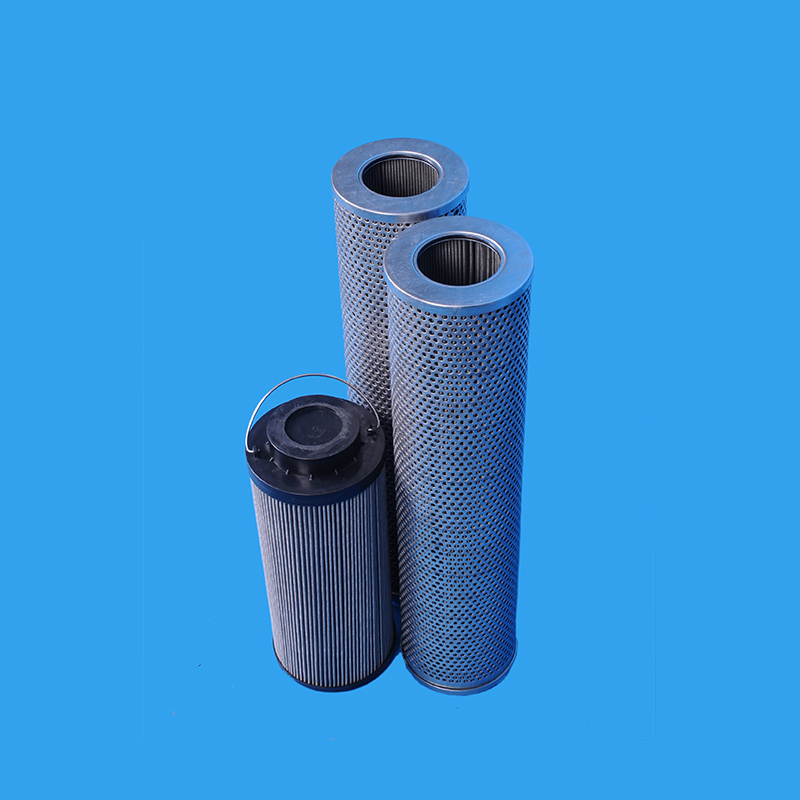
To solve the failures of conventional media, you must look to advanced metallurgy. Sintered elements do not rely on glues, binders, or weak threads. They rely on molecular bonds created under intense heat and pressure.
The sintering process fundamentally alters the metal. Manufacturers compress metal powder or fibers, then heat them in a controlled atmosphere furnace. They keep the heat just below the exact melting point of the alloy. The metal grains fuse together at their contact points. This creates a completely rigid, fixed-pore matrix. The pores will not stretch, shift, or deform under severe mechanical stress. When pressure spikes occur, the internal matrix holds firm. The micron rating remains absolute.
Understanding particle capture is essential. A sintered metal filter cartridge captures particulates through two distinct mechanisms. Surface filtration stops larger particles right on the exterior face. Depth filtration traps finer particles within the tortuous internal pathways of the metal matrix. Over time, the captured particles form a permeable layer called a dust cake. This dust cake actually enhances the filtration efficiency. The cake itself acts as a highly effective filter medium. It enables outstanding gas-solid separation without immediately choking the gas flow.
Sintered elements offer a massive operational advantage: they are permanently cleanable in place. You never have to break system containment. Facilities typically use a pulse-jet or reverse-flow blowback mechanism. The system introduces a high-pressure burst of clean gas in the reverse direction of normal flow. This sudden reverse pulse physically blasts the accumulated dust cake off the filter surface. The dislodged solids fall directly into a collection hopper. The filter regains its original permeability. The process continues running seamlessly.
Best Practice: Always monitor the differential pressure (dP) across the filter housing continuously. Initiate the blowback cleaning cycle before the dP reaches the manufacturer’s critical maximum limit. This actively prevents particles from wedging too deeply into the pore structure.
You cannot buy a one-size-fits-all solution. Sintered media comes in three primary structural forms. Each serves a very specific engineering purpose. Selecting the wrong form factor guarantees poor system performance.
Engineers create this media by compacting fine metal powders. It forms a dense, robust, sponge-like structure.
Best for: Precise particle classification and applications demanding extreme mechanical strength. It excels at rigid depth filtration.
Trade-off: The dense structure inherently creates a higher initial pressure drop. It requires more energy to push gas through the thick walls compared to fiber media.
This media consists of multiple layers of woven wire cloth. Manufacturers align the layers and sinter them together permanently.
Best for: Surface filtration and moderate-to-high flow applications. It offers excellent in-situ cleanability because the pores follow a direct, geometric path. The structure provides exceptional rigidity.
Trade-off: It features a significantly lower dirt-holding capacity than porous depth media. Particles stay on the surface, meaning the filter blinds faster if not cleaned frequently.
Manufacturers create this material by laying down microscopic metal fibers into a non-woven web, then sintering the contact points.
Best for: Maximizing overall porosity. Fiber media can achieve up to 85% void volume. This offers ultra-low pressure drops and sustains exceptionally high flow rates in gas filtration systems.
Trade-off: The highly porous nature reduces its standalone burst strength. You usually must design internal support cores to withstand high-pressure differentials safely.
Media Type | Primary Mechanism | Porosity Level | Relative Pressure Drop | Ideal Application |
|---|---|---|---|---|
Porous (Powder) | Depth Filtration | Low (30-45%) | High | High-stress containment, sparging |
Wire Mesh | Surface Filtration | Medium (40-50%) | Moderate | Coarse particulate removal, easy backwash |
Fiber (Felt) | Depth & Surface | High (Up to 85%) | Low | High-velocity gas streams, fine dust capture |
Transitioning to sintered metal media immediately unlocks several critical performance capabilities. You can push your process parameters further than ever before. Plant capabilities expand dramatically once filter fragility is removed from the equation.
Standard process designs often require massive cooling mechanisms. You must cool hot gases before they hit polymeric filters. This wastes immense amounts of thermal energy. Sintered metal allows you to filter gases directly from high-temperature reactors. You operate efficiently at actual process temperatures. This actively prevents cooling-phase condensation. Condensation causes sticky particulate agglomeration, which destroys process piping. Furthermore, you can capture and recover highly valuable catalyst fines directly. Fluidized Catalytic Cracking (FCC) units in refineries save massive amounts of money by recovering precious metals directly from the hot gas stream.
Extreme chemical environments demand precise metallurgical matching. You cannot use standard steel in a highly acidic gas stream. Sintered filters offer vast material flexibility.
316L Stainless Steel: This serves as the industrial baseline. It handles general high-temperature applications up to 400°C seamlessly.
Hastelloy (e.g., C-276): You must choose this for gas streams containing high levels of wet chlorides, sulfuric acids, or harsh halogens.
Inconel (e.g., 600): This alloy dominates in extreme heat applications. It maintains incredible tensile strength even when gas temperatures approach 900°C.
Environmental emission standards grow stricter every year. Regulatory bodies mandate near-zero particulate emissions for certain hazardous processes. Sintered media delivers absolute particulate retention. You eliminate the risk of random bypass leaks caused by torn filter bags. Clean gas protects sensitive downstream equipment. You completely shield expensive gas turbines and massive compressors from destructive particulate erosion. Facility safety metrics improve alongside environmental compliance.
While sintered elements offer incredible durability, poor engineering will still cause system failure. You must navigate several technical hurdles during the specification and installation phases. Blindly swapping a cloth bag for a metal cartridge will not work.
Irreversible media blinding represents the greatest technical risk. Blinding occurs when ultra-fine particulates wedge permanently into the internal pore matrix. They refuse to dislodge during the blowback cycle. Incorrect pore sizing causes this. If you select a pore size slightly too large, particles penetrate too deeply. If your blowback gas pressure is inadequate, it lacks the kinetic energy to fracture the dust cake. You must carefully calculate the exact face velocity. High face velocities force particles deep into the metal structure prematurely.
Common Mistake: Operating a blowback system with wet or heavily contaminated instrument air. Moisture immediately turns the captured dust cake into a cement-like sludge. The sintered pores will clog permanently. Always use completely dry, clean pulse gas.
Housing design requires meticulous attention. You cannot use standard elastomer O-rings in hot gas systems. Viton or EPDM seals will melt and fail instantly at 300°C. You must upgrade your sealing mechanisms. Grafoil (graphite) gaskets or custom metallic C-rings provide the only reliable seals for extreme heat. Furthermore, you must model the thermal expansion of the housing. The filter tubesheet and the filter elements expand at different rates. If you do not account for thermal expansion, the elements will buckle or snap at the welds. Finally, flow distribution matters. If gas hits one side of the filter array too hard, those specific filters will blind rapidly while others remain clean.
You cannot source critical process components from simple catalog distributors. Severe gas applications demand heavy engineering support. You must vet your manufacturing partners thoroughly.
Look for vendors that offer advanced computational fluid dynamics (CFD). CFD flow modeling ensures the gas distributes evenly across the entire filter array. Demand pilot-scale testing capabilities. A reliable supplier will test your specific process dust on their media in a lab. They validate the exact blowback pressure required to clean the elements effectively before you ever install the full system.
Avoid suppliers who force you into standard, off-the-shelf SKUs. Industrial retrofit projects rarely feature perfectly standard dimensions. Evaluate the supplier’s ability to engineer custom geometries. They should alter specific micron ratings to match your unique process parameters. Custom fittings, specific lengths, and reinforced support cores are mandatory for complex retrofits.
Traceability guarantees safety in pressure vessels. Ensure the supplier provides rigorous material test reports (MTRs). You must prove the alloy is actually Hastelloy and not a cheaper substitute. Require ISO-certified manufacturing data. Every weld on a sintered element must pass strict quality control to prevent catastrophic bypass leaks.
Transitioning to robust sintered metal media represents a highly strategic operational upgrade. It goes far beyond a simple maintenance swap. You permanently eliminate the inherent fragility of polymeric fabrics and fiberglass. You gain the ability to filter aggressively hot, chemically volatile streams continuously. By selecting the correct media type and alloy, you protect critical downstream machinery and lock in environmental compliance.
Do not attempt to guess your specific filtration parameters. We strongly encourage you to initiate a deep technical consultation. Request a comprehensive process audit from a qualified manufacturer. Ask them to perform a pilot test with your specific process gas and particulate. Validate your exact pressure drop parameters and required blowback velocities. Secure your plant's reliability by engineering the exact right solution today.
A: The lifespan depends entirely on the cleaning cycle and the chemical environment. However, these filters routinely operate efficiently for several years. They exponentially outlast traditional polymeric alternatives, which often require replacement every few months under identical high-stress conditions.
A: Yes. You can recover heavily fouled cartridges using specialized ex-situ cleaning methods. Technicians typically remove the filters and apply powerful ultrasonic cleaning. They may also use precise chemical baths to dissolve the foulant, or controlled burnout ovens to vaporize organic blockages entirely.
A: The pressure drop is highly variable. It depends strictly on the specific media type (fiber vs. powder), the selected micron rating, and the operational gas velocity. Fiber felts offer exceptionally low drops, while thick powder media inherently runs higher. You must always require custom flow calculations.
A: The system utilizes a sudden, high-pressure gas pulse directed in the reverse direction of normal process flow. This sharp burst physically dislodges the accumulated particulate cake from the filter surface. The debris falls away, and the system continues operating online without any manual intervention.


