


Views: 0 Author: Site Editor Publish Time: 2026-10-23 Origin: Site


Industrial filtration in harsh environments is a high-stakes game. When dealing with aggressive chemicals, extreme pressures, and soaring temperatures, utilizing the wrong porous media inevitably leads to catastrophic system failures. Recent industry shifts have fundamentally altered fluid processing. The global push for renewable energy requires aggressive chemical synthesis for lithium-ion battery materials. Deeper offshore oil extraction exposes equipment to unprecedented chloride levels. Stricter environmental emission controls demand flawless gas scrubbing. Plants are now handling hotter, more acidic media than ever before. This new reality renders legacy filtration materials obsolete and forces engineers to completely rethink their metallurgical strategies.
From a frontline engineering perspective, we are witnessing a massive industry migration. Facilities are moving away from basic austenitic steels toward advanced superalloys to prevent costly downstream contamination. Technical buyers often struggle to differentiate between the top tier of specialized alloys. Navigating the nuances of premium metals is absolutely essential to maintaining system integrity. To ensure continuous operation, facility managers must carefully evaluate specific chemical and thermal demands before selecting corrosion-resistant metal filters that can actually withstand this daily punishment.
SS316L provides the most cost-effective baseline for mild to moderate corrosive environments but struggles significantly with hot chlorides and severe reducing acids.
Hastelloy offers unparalleled resistance to severe localized corrosion, making it the ultimate choice for highly acidic, chemical-heavy filtration processes.
Inconel stands as the definitive go-to material for extreme high-temperature applications combined with severe oxidation and continuous corrosion risks.
Proper material selection requires a strict empirical balance of chemical compatibility, operating temperature, system pressure, and overall lifecycle budget.
The physical architecture of the filter element plays a crucial role alongside your specific alloy choice, whether engineered as a rigid sintered powder matrix or a highly porous metal fiber felt.
In heavy industrial piping and robust reactor vessels, facility engineers frequently rely on the concept of corrosion allowance. By simply adding extra wall thickness to a solid metal component, they account for gradual material loss over decades of use. However, this brute-force concept fails completely in advanced industrial filtration. Filters rely on highly precise, microscopic pore sizes—typically ranging from 0.2 to 100 microns—to trap contaminants while maintaining optimal flow rates. Even a microscopic amount of material degradation alters the pore structure permanently. This degradation leads directly to compromised filtration efficiency, unacceptable pressure drops, or total structural collapse.
Because filter elements possess an exceptionally high surface-area-to-volume ratio, they are exponentially more susceptible to chemical attacks than solid steel pipes. When aggressive fluids are forced through these fine porous structures at high velocities, the rate of chemical interaction accelerates dramatically. Picture a continuous-process petrochemical refinery. Shutting down to replace a degraded cartridge costs tens of thousands of dollars per hour. If a standard mesh filter dissolves within weeks, it leaves sensitive downstream catalytic beds completely unprotected.
The financial and operational costs of getting this wrong are severe. Rapid filter degradation inevitably leads to frequent replacement cycles and the high risk of ruined end-products. In sectors such as sour gas extraction and active pharmaceutical ingredient manufacturing, mastering metallurgical selection is the only guaranteed path to process stability.
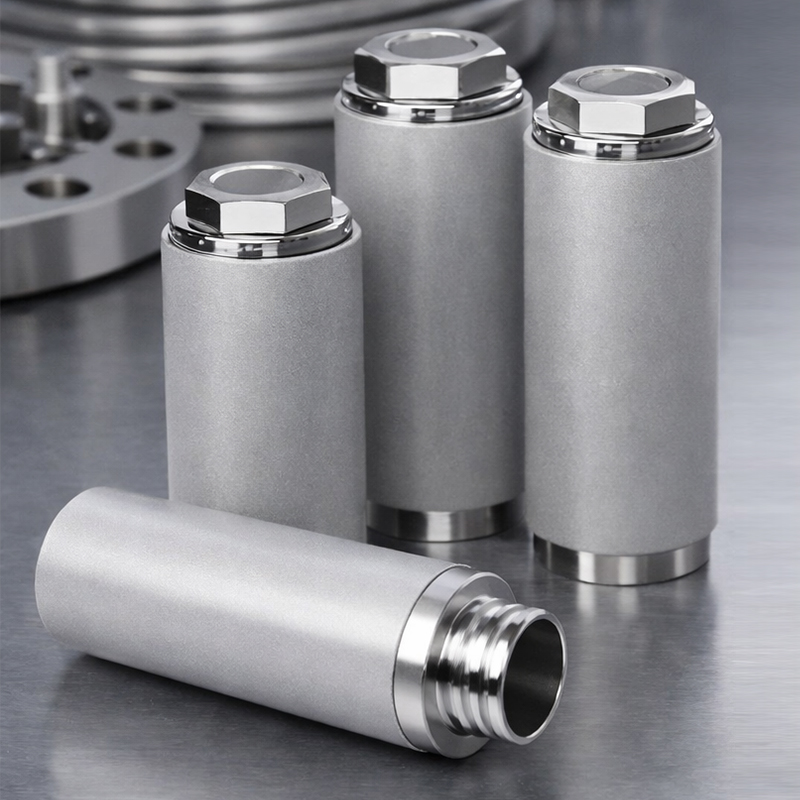
Stainless Steel 316L remains the most widely utilized alloy in global industrial filtration. The "L" designation denotes a low carbon content restricted to a maximum of 0.03 percent. This critical metallurgical feature prevents carbide precipitation during welding and high-temperature processing. Consequently, it drastically reduces the risk of intergranular corrosion along the weld seams of the filter housing.
The defining characteristic of this alloy is the strategic addition of 2 to 3 percent molybdenum to the standard chromium-nickel austenitic matrix. This specific molybdenum inclusion significantly enhances its resistance to general degradation and localized pitting when compared to standard 304 stainless steel.
Key Strengths:
Engineered SS316L filters exhibit excellent general corrosion resistance when exposed to process water, mild industrial chemicals, organic solvents, and neutral biological fluids. When manufactured as a sintered metal fiber felt, this material can achieve a high porosity of up to 80 percent, offering exceptional dirt-holding capacity and low initial pressure drops. From a procurement standpoint, it is highly cost-effective compared to specialized nickel-based superalloys. It also offers excellent formability, making it highly versatile for manufacturing complex pleated elements.
Limitations:
Despite its widespread reliability, this baseline alloy has strict empirical limits. It becomes highly vulnerable to pitting and crevice corrosion in high-chloride environments. This vulnerability spikes as fluid temperatures rise, such as in warm seawater desalination or hot brine processing. Additionally, it degrades rapidly when exposed to reducing acids like hydrochloric acid and intermediate concentrations of sulfuric acid.
Best Applications:
Due to its balanced performance profile and economic accessibility, SS316L serves as the baseline standard for food and beverage processing, standard pharmaceutical manufacturing, municipal water treatment, and light industrial chemical filtration.
When process fluids exceed the chemical thresholds of standard austenitic stainless steels, engineers must turn to heavier metallurgical artillery. Hastelloy represents an elite family of nickel-molybdenum-chromium superalloys. Hastelloy C-276 is the most prominent grade specified for extreme liquid and gas filtration.
The remarkably high nickel content of approximately 57 percent and molybdenum content of up to 17 percent provides exceptional resistance to reducing environments. Simultaneously, the robust chromium content forms a tough passive layer against oxidizing media.
Key Strengths:
By leveraging its unique chemistry, Hastelloy filters offer documented, unparalleled resistance to localized corrosion phenomena. This includes pitting, crevice corrosion, and stress corrosion cracking—the exact failure modes that easily destroy lesser metals. Hastelloy C-276 is one of the rare materials capable of safely handling wet chlorine gas, sodium hypochlorite, and chlorine dioxide. It consistently delivers outstanding structural integrity in boiling acids, including highly concentrated sulfuric and phosphoric acids.
Limitations:
The primary hurdle when specifying this superalloy is its high upfront procurement cost. This price is driven heavily by the volatile global market prices of raw nickel and molybdenum. Moreover, its extreme toughness and rapid work-hardening characteristics make it notoriously difficult to machine and sinter. This complexity adds significant manufacturing labor overhead.
Best Applications:
This material is the definitive choice for aggressive chemical synthesis plants, sour gas filtration in the oil and gas sector, heavy pollution control systems like flue gas desulfurization, and any application involving hot, concentrated industrial acids.
While Hastelloy dominates the realm of wet chemical corrosion, Inconel is the undisputed master of extreme heat and oxidative stress. Inconel alloys, particularly specialized grades like Inconel 600 and Inconel 625, are nickel-chromium-based superalloys engineered primarily to survive brutal thermal environments.
Inconel 625 derives its massive mechanical strength from the stiffening effect of molybdenum and niobium on its dense nickel-chromium matrix. This unique atomic structure allows the alloy to maintain its rigid form without requiring complex precipitation hardening treatments.
Key Strengths:
The defining advantage of Inconel filters is their ability to retain exceptional tensile strength, creep resistance, and structural stability at extreme temperatures. These elements often operate continuously in environments exceeding 1000 degrees Celsius. At these soaring temperatures, Inconel forms a thick, highly stable, passivating oxide layer. This shield protects the internal porous structure from further oxidation and scaling. It also offers excellent resistance to high-purity water and highly concentrated caustic alkalis.
Limitations:
Similar to other premium superalloys, Inconel carries a substantial price tag. The exact same metallurgical properties that give it extreme high-temperature strength also make it highly abrasive to tooling during the manufacturing processes. Specialized fabrication techniques, such as electrical discharge machining or advanced vacuum sintering, are strictly required.
Best Applications:
Engineers primarily specify Inconel for aerospace fluid filtration, nuclear reactor coolant systems, high-temperature exhaust gas filtration, catalyst recovery in petrochemical refining, and any advanced process where extreme heat is combined with oxidative gases.
To streamline your material selection process and engineer a robust filtration system, you must compare these alloys across specific, measurable parameters. The comparative matrix below outlines their baseline capabilities.
Performance Metric | SS316L | Hastelloy C-276 | Inconel 625 |
|---|---|---|---|
Base Alloy Type | Iron-Chromium-Nickel | Nickel-Molybdenum-Chromium | Nickel-Chromium-Molybdenum |
Max Operating Temp | Up to 400°C | 400°C to 500°C | Over 1000°C |
Pitting Resistance Number | 23 to 28 | Over 45 | 40 to 50 |
Chloride Resistance | Low to Moderate | Immune to most pitting | Highly resistant |
Acid Compatibility | Mild or Dilute only | Severe and Boiling Acids | Moderate acids, excellent in alkalis |
Relative Cost Profile | Low Baseline | High Premium | Very High Premium |
Thermal degradation is a primary failure mode in fluid processing. As ambient and fluid temperatures rise, the yield strength of standard stainless steel begins to drop significantly. SS316L is generally rated for continuous use up to roughly 400 degrees Celsius in oxidizing environments. Beyond this threshold, it experiences rapid scaling and mechanical failure. Conversely, when thermal dynamics shift into the extremes, Inconel is the undisputed champion. It maintains its yield strength and resists oxidation even when exposed directly to combustion gases or superheated steam well over 800 degrees Celsius.
In the realm of corrosive fluids, the Pitting Resistance Equivalent Number is a vital predictive metric. Calculated based on the alloy's chemical composition, a higher number indicates vastly greater resistance to localized pitting in chloride-rich environments like seawater. SS316L typically hovers around a score of 24. Hastelloy C-276, however, boasts a score exceeding 45. This mathematical leap demonstrates its superior ability to process wet chlorine gas and boiling sulfuric acid—environments that would dissolve standard stainless steel in a matter of hours.
Procurement managers must look beyond the initial purchase order. Deploying SS316L in a highly aggressive chemical application simply because it is cheaper upfront is a dangerous false economy. The true cost of a filter includes maintenance labor, replacement frequency, and the catastrophic cost of unplanned system downtime. In severe environments, the premium initial purchase price of superalloys provides a vastly superior return on investment. Extended operational longevity guarantees uninterrupted production, saving facilities thousands of dollars annually.
Selecting the optimal alloy is not a guessing game. It is a precise engineering decision based on fluid dynamics, thermodynamics, and physical design. Evaluate the following critical parameters to ensure long-term reliability in your facility.
The exact chemical makeup of the process media is the most critical variable dictating your choice. You must identify all aggressive compounds, including trace elements. Even minute amounts of fluorides or chlorides can initiate localized corrosion over time. Determine the exact pH level and concentration percentages. For instance, while SS316L can handle 98 percent sulfuric acid at room temperature, if that concentration drops to 50 percent or the temperature spikes, upgrading to Hastelloy becomes an absolute necessity to prevent rapid dissolution of the filter matrix.
Heat accelerates chemical reactions exponentially. A fluid that is benign at room temperature can become aggressively destructive at 150 degrees Celsius. High system pressures exert immense physical stress on the porous media. When evaluating these metrics, consider both the continuous operating baseline and potential thermal spikes during system upsets. High system pressures require materials that will not deform or yield under stress. This makes the superior high-temperature tensile strength of Inconel highly desirable in extreme conditions.
The metallurgical composition is only half of the equation. The physical architecture of the filter dictates its hydraulic performance, pressure drop, and dirt-holding capacity. For applications requiring rigid mechanical strength, precise surface filtration, and the ability to withstand aggressive backwashing cycles, engineers consistently specify sintered metal powder filters. Conversely, if your process demands high porosity, exceptional dirt-holding capacity, and deep depth filtration for highly viscous polymers, sintered metal fiber felt filters provide the superior structural solution. Both formats can be successfully manufactured in standard stainless or premium superalloys.
Industrial metal filters are engineered to be cleaned and reused. The cleaning process itself, however, can be highly aggressive. Common industrial regeneration methods include ultrasonic baths, deep chemical soaking using strong acids to dissolve contaminants, and high-temperature pyrolysis to burn off organic matter. Your chosen alloy must account for these rigorous cleaning cycles. Alloys like Hastelloy and Inconel tolerate aggressive chemical and thermal cleaning far better than standard stainless steel, drastically extending the mean time between failures.
Synthesizing the field data, the choice between these three premium metals comes down to perfectly matching their specific metallurgical strengths to your operational vulnerabilities.
Choose SS316L if: Your facility operates on a strict budget, your operating temperatures remain moderate below 400 degrees Celsius, and your process fluids consist of standard water, mild organic solvents, or lightly corrosive chemicals with a neutral pH.
Choose Hastelloy if: You are dealing with the most aggressive chemical environments known to industry. If your process involves highly concentrated sulfuric acid, hydrochloric acid, sour gas, or hot chloride-rich fluids where standard steel would suffer from severe pitting, this is a mandatory investment.
Choose Inconel if: Your primary operational enemy is extreme heat. When filtering aerospace fluids, nuclear coolants, or high-temperature exhaust gases where temperatures regularly exceed 800 degrees Celsius, this superalloy provides the necessary oxidation resistance and structural stability that other metals simply cannot maintain.
The compatibility of SS316L with sulfuric acid is highly dependent on both concentration and temperature. SS316L can handle very dilute or highly concentrated sulfuric acid at ambient room temperatures. However, at intermediate concentrations—where the acid is actually most reactive—or at elevated temperatures, standard stainless steel will corrode rapidly. For hot or intermediate sulfuric acid filtration, upgrading to a nickel-molybdenum alloy is strictly required to maintain structural integrity.
The significant price disparity is driven by raw material costs and intense manufacturing complexity. Both are classified as superalloys, containing high percentages of inherently expensive global commodities like nickel, molybdenum, and chromium. These metals are notoriously difficult to machine, weld, and sinter. Their extreme toughness means they wear down manufacturing tooling quickly, adding substantial labor, time, and processing costs to the final product.
While both superalloys perform exceptionally well in harsh marine environments, Hastelloy is generally considered superior for warm seawater and high-chloride applications. This is due to its exceptionally high Pitting Resistance Equivalent Number. The high molybdenum content provides unparalleled resistance to localized pitting and crevice corrosion, which are the most common failure modes in offshore desalination platforms and oil rigs.
Sintered metal filters are designed for repeated regeneration. Common cleaning methods include backwashing with clean fluid or gas, ultrasonic cleaning in a solvent bath, chemical cleaning using mild acids or alkalis to dissolve specific foulants, and high-temperature burnout for organic contaminants. The specific cleaning regimen depends entirely on the nature of the trapped particulate and the base alloy of the filter.
The pressure drop across a sintered metal filter depends on the fluid viscosity, flow velocity, and the specific pore size and porosity of the filter element. Sintered powder filters generally exhibit a higher initial pressure drop due to their dense, tortuous path structure. In contrast, metal fiber felt filters, which boast up to 80 percent porosity, offer significantly lower initial pressure drops and are better suited for highly viscous fluids.
There is no universal solution in advanced industrial filtration. Masterful material selection is a precise, empirical science that requires balancing chemical compatibility, thermodynamics, and lifecycle economics. Relying on baseline materials in extreme environments is a guaranteed path to system failure and compromised safety. If you are struggling with rapid filter degradation or designing a new high-stress fluid system, exploring the premium filtration solutions at Berae will provide the exact metallurgical match your process demands. Evaluate your thermal and chemical parameters today, and upgrade your filtration architecture to ensure pure, uninterrupted production.


